
Once upon a time in internet history, having access to a recipe on a blog post was an exciting and novel thing. We no longer had to buy a $30 cookbook or tune into daytime TV to learn how to make banana bread.
Fast forward to today, scrolling through a massive blog post to find that same recipe feels like punishment. The medium changed, and so did what audiences considered “valuable.”
Because here’s the truth: what audiences find valuable changes as the internet changes.
The anatomy of ‘valuable content’ has changed
A similar shift has occurred in B2B content.
What used to feel fresh, like the classic “10 tips” blog or high-level “how-tos,” now feels like the 3,000-word banana bread recipe with too much backstory. You know exactly what’s coming before you scroll. It’s become forgettable.
The truth is, the internet no longer rewards sameness. You could follow all the SEO best practices, avoid all the classic blog mistakes, even have great writers, but your blog and content marketing still feel empty.
I’ve been thinking a lot about why that happens and about the anatomy of “valuable” content in B2B. After years of working in content marketing, I began to notice a pattern among the few pieces that truly stood out; they all shared a few traits. Those common threads became a simple framework consisting of five qualities that separate valuable content from everything else.
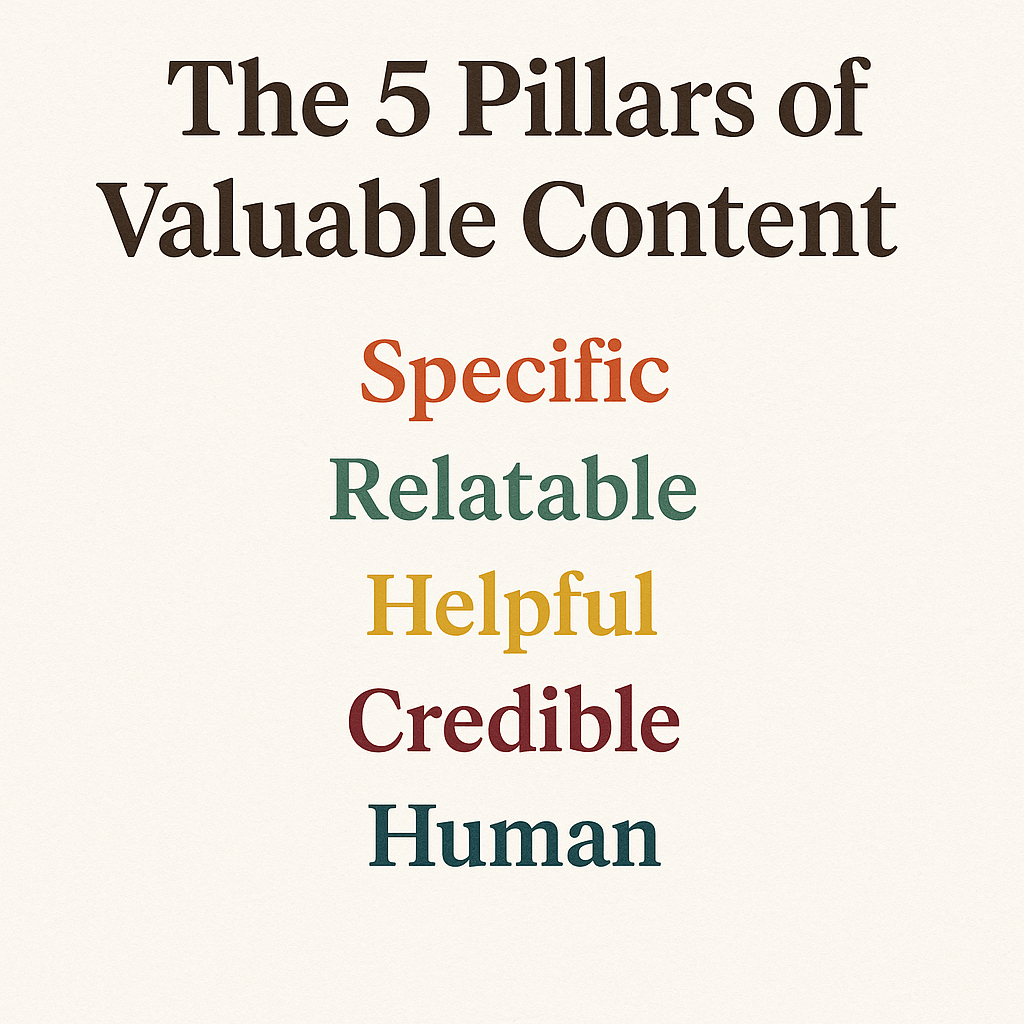
Pillar 1: Make Your Content Specific
Generic content is everywhere. Don’t believe me? Google a high-competition keyword in your industry, and the top five results will probably look identical.
Click on the article, and the content may sound just as astonishingly generic: “promote mental well-being, “foster transparency,” or “build trust with your teams.” It’s not that these statements are wrong; they’re just hollow. They sound nice, but don’t say anything really; it gives the illusion of value while offering none.
Interestingly, for many companies, top-of-funnel content is a key driver of traffic. By that measure, your content marketing seems successful. But traffic means little if it doesn’t convert to leads and ultimately customers.
There are two issues with overrelying on broad, top-of-funnel content:
- It mostly attracts readers who aren’t ready to buy.
- Competition for those keywords is fierce.
For small and mid-sized B2B brands, the old playbook of pumping out TOFU listicles simply doesn’t work anymore. It can be a part of your broader content strategy, but it shouldn’t take up the whole pie.
The antidote: depth over breath. Internet audiences crave specificity. Specificity is what creates connection.
For example:
- “Best practices for SaaS content marketing in 2025.”
- “How a Series-A SaaS startup with one marketing manager can produce consistent SEO content without burning out.”
The second version goes deeper. It’s not abstract “best practices,” but a concrete, real-world scenario. It’s more practical and useful, and as we’ll see in the following sections, far more valuable to the reader.
Pillar 2: Content Should Feel Relatable
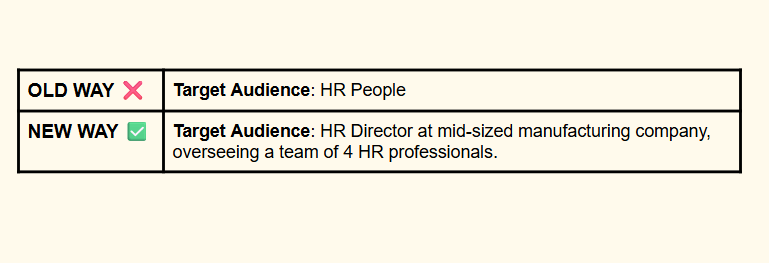
The best B2B content feels like it was written for one person sitting across the table from you. It mirrors their lived reality and speaks directly to their problems.
Your audience should read it and think, “Wow, this person really gets me and what I’m going through.” They need to feel understood.
This doesn’t happen when you target a broad group, such as “HR professionals” or “leaders.” There’s a big difference between a 25-year-old HR generalist at a startup and a 50-year-old HRBP at a multinational. Their challenges, language, and incentives differ wildly. When you lump them together, your content loses credibility.
This is one of the biggest challenges for content marketers. We are writing for experts about subjects where we ourselves are not experts. And when that understanding is shallow or secondhand, even well-intentioned content will fall short. It just won’t connect.
However, after years of writing and creating content for a specific industry, we naturally become an expert of sorts; genuine empathy with an audience develops over time.
What I’ve found helpful to speed up the process is to immerse myself in my audience’s world. I enjoy spending time in Reddit communities, following threads, and interacting with industry influencers. I also listen to podcasts and follow meme and humor pages to gain a deeper understanding of the day-to-day life of my target audience. The more your content reflects their exact pain in their own words, the more “valuable” it will feel.
Pillar 3: Content Should Be Helpful
Low-quality content is like a stylish designer chair that looks incredible in a showroom but feels like torture to actually sit on. It’s beautiful, yes. But it fails at its only job.
Generic, low-quality content is the same. There is no new information or new insights to glean. You reach the end (if you can make it that far), and wonder if you’ve learned anything new.
Valuable content, on the other hand, is practical. It makes the reader feel equipped to take even a small step forward today.
Practical content doesn’t drown readers in abstract, high-level advice, such as “build trust with your audience” or “make your team feel heard.” It translates those ideas into concrete steps, frameworks, or examples that show you how to actually do it. That often means including templates, screenshots, decision trees, and the evidence of the raw and real processes others have taken to solve the same problem.
Before publishing, ask yourself:
- Would someone bookmark this or share it with a colleague?
- Can a reader use this tomorrow in their job?
- If they followed the advice here, would they be able to measure a result?
If the answer is no, it’s probably not as helpful as it could be. Helpful content is what builds trust. And that’s ultimately what leads people to consider your brand when they’re ready to buy.
Pillar 4: Content Should Be Credible
Credibility is the cornerstone of valuable content. In our current internet climate, anyone can become a “thought leader” and share their experiences overcoming specific issues.
In other words, brands aren’t just competing with other businesses anymore; they’re competing with individuals who have lived the problem. Those people have an automatic trust advantage. Internet audiences don’t usually turn to faceless corporations to solve specific issues.
To remain competitive, companies must incorporate genuine expertise into their content. That can look like:
- Interviewing internal subject-matter experts.
- Sharing your business’s first-hand experience.
- Quoting specialists or recognized voices in the space.
- Referencing credible studies, data, or customer examples.
- Admitting uncertainty or nuance (“This approach works if you have XYZ set up”).
And if you don’t have access to SMEs for every piece, at the very least, source reputable studies or benchmark reports. In 2025, nothing kills credibility faster than “according to research” with no outbound links or citation.
Pillar 5: Content Needs To Feel Human
Somewhere between optimizing for keywords, chasing traffic, and trying to position themselves as a “thought leader,” many B2B brands forgot they are writing for humans.
Many companies also worry that sounding too casual will make them seem less professional, so they stop trying to differentiate themselves, and their content positioning weakens.
The result? Content that feels sanitized, generic, and devoid of personality. Cue the corporate jingle.
Worse, when content is written with a “search engine first” mentality, it’ll be very obvious. It’s bloated with filler, stuffed with keywords, and padded with irrelevant points just to hit a word count. As stated before, the content will feel generic, as if it could be written for anyone.
That means:
- Use conversational language and natural rhythm.
- Tell real stories and use analogies that bring abstract ideas to life.
- Show vulnerability, share struggles and obstacles that were overcome.
- Use humor when appropriate.
- Prioritize clarity and tone over word count.
Professional and authoritative doesn’t have to mean cold or robotic. Your tone can carry warmth, empathy, clarity, and conviction without losing credibility.
In fact, the most effective B2B writing still sounds like it was written by a human being who truly understands the reader’s world. Because at the end of the day, people remember how your content made them feel. It strikes an emotional chord. And human-sounding content will always be more effective at creating that resonance.
You Can’t Manufacture Value
The myth of “value-add content” is that value can be engineered with keywords, frameworks, or strategy decks.
And yes, I see the contradiction I’m making…
I just gave you a five-part model for creating valuable content while simultaneously telling you that value can’t be manufactured. But that’s the point. Frameworks like these are rough guidelines or mental models. It’s not a formula or a checklist that guarantees success.
That’s why you can’t “add value” by simply stuffing in more facts, experts’ quotes, or even real bona fide Harvard studies. Are those things useful? Is that what the reader wants? Is it helpful and actionable? If you’re doing this without thinking of these questions, then you’re just going through the motions of the tactic without understanding the real goal behind it.
Every truly valuable piece of content I’ve seen has one thing in common: it respects the reader’s time, intelligence, and reality.
In the end, “adding value” is more about what your audience takes away from it: greater knowledge, confidence, or even a sense of being seen and understood. At its core, value comes from empathy and authenticity. And that can’t be optimized; it has to be earned.
 Content Marketing For Small Businesses
Leave a comment